
春日
铁路新增教师积分优惠 相关车票明日起陆续发售_我的网站

一 |
记者从中国国家铁路集团有限公司(以下简称“国铁集团”)获悉,9月10日起,铁路部门在现行“铁路畅行”常旅客会员服务基础上,对常旅客会员中的教师实施积分优惠,铁路12306手机客户端同步新增“教师资质信息核验”专区,常旅客会员中的教师可在铁路12306手机客户端专区登录,与教育部全国教师管理信息系统中的信息核对验证教师身份后,在乘坐2026年9月10日至12月30日的火车到站后可获得票面金额10倍积分,为普通常旅客会员的两倍,会员积分可用于兑换火车票或办理座位升席。 Global consulting giant McKinsey & Company advised several painkillers producers for 15 years on how to "turbocharge" prescription drug sales largely to blame for starting the opioid epidemic in the US, The New York Times has revealed citing over 100,000 documents.,The docs emerged as a part of a settlement deal that McKinsey signed with several state attorneys that sued the company.,Apart from working with Endo, Purdue, and Mallinckrodt, the company also provided "in-depth experience in narcotics" for Johnson & Johnson subsidiaries producing controlled substances. Meanwhile, hundreds of thousands of US citizens died from overdose, often linked to these very drugs.,How It All Started,According to the disclosed documents, McKinsey helped both Endo and Purdue, the creators of two of the most widespread opioid-based drugs for severe chronic pain, to launch their products Opana and OxyContin in 2006-2008. The firm even advised one of the companies on how to overcome a Food and Drug Administration (FDA) block which it had encountered in 2008.,The FDA blocked Purdue's attempt to release an upgraded version of its OxyContin, which was more difficult to snort or dilute and inject in bloodstream – two methods of the prescription drug's abuse that already had been devised by some of its recipients. In order to help Purdue get the license, McKinsey interviewed an ex-drug dealer on the medication's abuse, prepared docs and even coached the drug firm's officials for meetings with the FDA as the pharmaceutical company knew its drug had been widely abused, the docs suggest.,Crack Pipes: Biden Administration's Handling of US Opioid Crisis Raising Questions, Journo Says15 February, 13:00 GMT,Purdue's main competitor, Endo, also released a new version of its painkiller and tried to get it marked as resistant to crushing (for snorting) and diluting (for injections), but the FDA did not allow the latter citing lack of such properties. Nonetheless, the drug's release was a success and coincided with a drop in abuse-resistant OxyContin's sales.,This came, however, at a cost of local epidemics of previously unseen blood disorders in several US states in 2012 – patients were found to be anemic and suffered from kidney failure. Many of them admitted to abusing updated Opana – the new formulae indeed discouraged from snorting it, but still allowed injection abuse. However, the same component that prevented crushing took a great toll on those who tried to inject the drug to get a better high, leading to red blood cells' destruction and organ damage.,Going on the 'Offensive',The consulting company's involvement in the opioid crisis did not stop at helping the companies to launch their products – it also helped them to boost the sales.,While the pills like the ones produced by Endo, Purdue and Mallinckrodt were originally advertised as not causing additions, US doctors were not always prone to prescribing them, especially when a patient's pain was neither severe nor chronic. According to the revealed documents, McKinsey's consultants helped Purdue, and several other companies, including two J&J subsidiaries, to overcome this "problem".,Starting in 2009, McKinsey developed a "segmentation" strategy for Purdue: its analysts divided the company's customers into groups based on their potential thoughts of the product and then formed distinct messages for each group. The customers in this case were doctors prescribing painkillers and the product was opioid drugs. The strategy targeted even doctors who resorted to opioids only in most extreme cases, ensuring them of OxyContin's safety and trying to convince them that there was no point in making their patients suffer.,The consulting company proposed to achieve this by "[raising] physician comfort levels through appropriate education and support". Purdue tried to convince these doctors that their colleagues had no issues prescribing OxyContin.,By 2014, the US government started to realize a nascent opioid drug problem was underway and introduced new labeling requirements for such drugs as well as instructions to use them only in cases of severe of chronic pain. Around the same time, OxyContin sales started to decline, prompting Purdue to ask for McKinsey's help once again – this time to overcome the government's policy and precautions.,The consultants identified the problem as the company promoting its drug as a less potent opioid amid rampant drug abuse and advised to shift to the "offense" instead, the documents show. They namely advised focusing the salesmen efforts on doctors, who were likely to prescribe OxyContin to a new client not previously taking opioid drugs.,"Physicians with higher OxyContin NBRx to Rx ratio may be more likely to initiate a patient on OxyContin", an extract from a McKinsey presentation for Purdue from January 2014 said.,Around the same time and amid the 2015 HIV concentrated outbreaks in several states linked to the opioid drugs abuse via injections, McKinsey consulted Endo on promoting its Opana. The company was not concerned about what the CDC named "explosive transmission" of HIV and the Opana's role in it, according to the documents. On the contrary, in summer 2015, it helped Endo rededicate most of its salesmen from other products into a "Sales Force Blitz" – the company almost solely dedicated to selling Opana to around 3,000 physicians in the US.,One of McKinsey's consultants was excited over the creation of the "Force", claiming in correspondence with the head of Endo’s painkiller unit that the "fun [begins] on Monday!" with the latter responding "agreed, the fun is just beginning".,Playing Both Sides,One of the strangest revelations in the documents uncovered by the New York Times is that McKinsey managed to play both sides of the opioid crisis tragedy – helping pharmaceutical companies sell more of "not-so-addiction-resistant" drugs, while also assisting the FDA, other government agencies and state governments, in the fight against the epidemic.,In 2017, the FDA finally decided to pull one of the drugs, the more potent Opana, from the market, but not until it made $844 million in revenue with help from McKinsey and played a role in the deaths of thousands of Americans, considered to be the victims of the opioid epidemic. Paradoxically, the same year, McKinsey Senior Partner Tom Latkovic lamented about doctors prescribing opioid painkillers left and right at a health care conference.,"Why do we continue to prescribe, dispense, pay for opioid prescriptions to people that we know, or at least we could know, have an incredibly high propensity to abuse them?" Latkovic wondered.,The bizarre divergence between what McKinsey was advising to the pharmaceutical companies and Latkovic's rhetoric is explained by the fact that he was not a member of the consulting company's pharmaceutical practice, which worked with pharma.,Instead, he and his team worked with state governments and health systems to pin down the ways of tackling the opioid crisis, The New York Times said citing two local officials, who used to work on the issue. Their work, however, was partly complicated by McKinsey's pharmaceutical wing, which wanted to greenlight their draft publications in case they could damage their clients.,North Carolina Rep. Claims Opioid Crisis 'Affects Every Community' in US Amid Drug Trafficking Surge19 December 2021, 01:36 GMT,Eventually in 2019, McKinsey finally stopped advising its top client, Perdue, but not until their ties became public during one of the litigations related to the opioid epidemic and initiated by US authorities. One such litigation eventually had McKinsey pay $600 million in settlement without admitting guilt, as well as release the documents related to its work with the pharmaceutical companies.。相关车票于8月27日起陆续发售。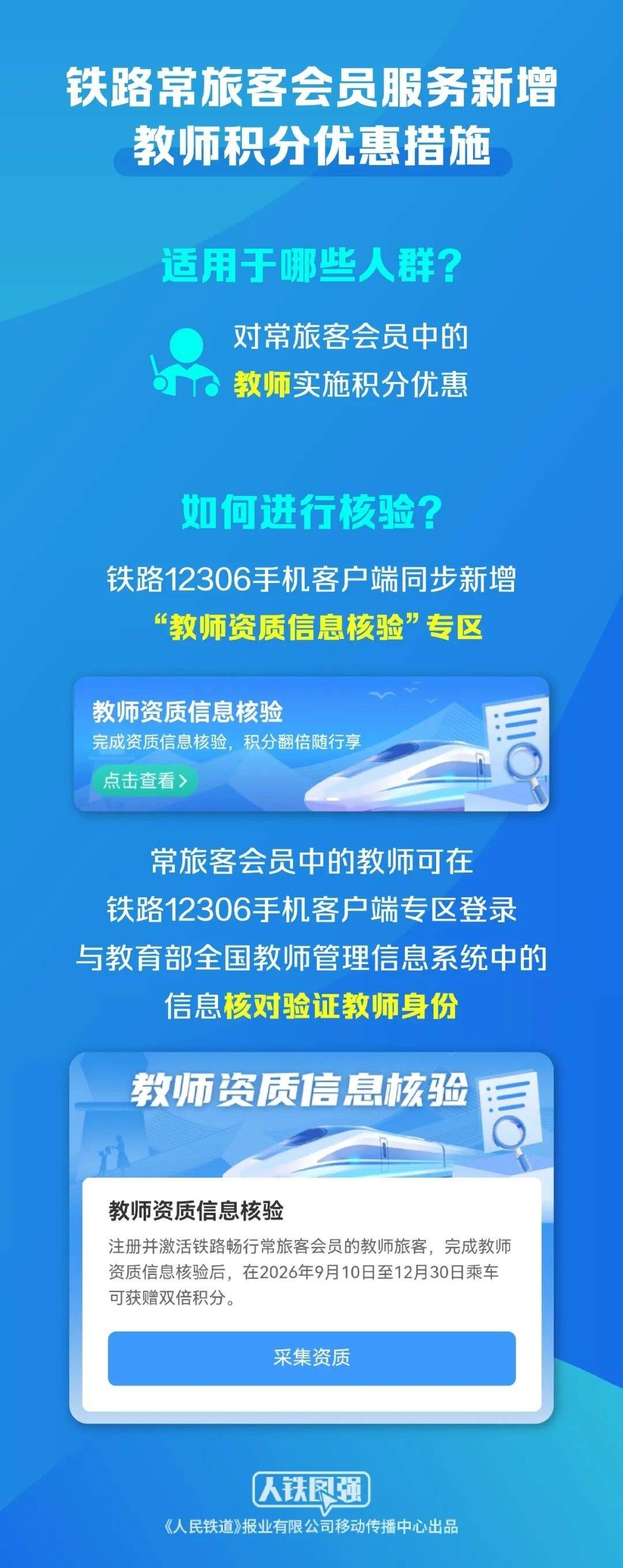
 国铁集团客运中心负责人介绍,“铁路畅行”常旅客会员服务是铁路部门为注册成为会员的旅客购票出行提供的积分累积及兑换的普惠服务,旨在进一步提升铁路客运服务品质,让乘坐火车出行的旅客享受更多实惠,提升铁路出行获得感。年满12周岁持居民身份证、港澳台居民居住证、港澳居民来往内地通行证、台湾居民来往大陆通行证、外国人永久居留身份证、护照的旅客通过铁路12306手机客户端、网站和车站窗口均可申请,通过身份认证后即成为“铁路畅行”常旅客会员。

二 | 会员在乘坐旅客列车(暂不含旅游专列、国际列车等)到站后,将获得会员积分,积分为票面金额的5倍,自入账起12个月内有效、不能转让。会员账户积分首次累积达到10000分时,会员可使用积分为本人或指定受让人兑换火车票,每名会员最多可设置8名受让人(不含会员本人),受让人在添加成功60天(含当天)后生效;也可在列车上兑换办理本人原车票未乘区间内的任意区间的升席;兑换时100积分可抵1元使用,不可与其他支付方式混合支付。

三 | 使用积分兑换的车票可办理1次改签并核收积分作为改签费,不能办理退票、变更到站业务;使用积分升席后的新车票不能办理退票、改签业务;因不可抗力或铁路责任造成兑换车票或升席车票不能使用时,可办理退票手续,兑换时使用的积分将返回会员账户,并重新计算有效期。 为更好地履行社会责任、服务重点旅客群体,铁路部门近年来对14至28周岁、年满60周岁的常旅客会员实行积分优惠,14至28周岁、年满60周岁的常旅客会员购票乘车到站后,分别可获得票面金额10倍、15倍的积分,即普通常旅客会员的两倍、三倍积分优惠。选择购买学生优惠票的常旅客会员暂不叠加双倍积分优惠。

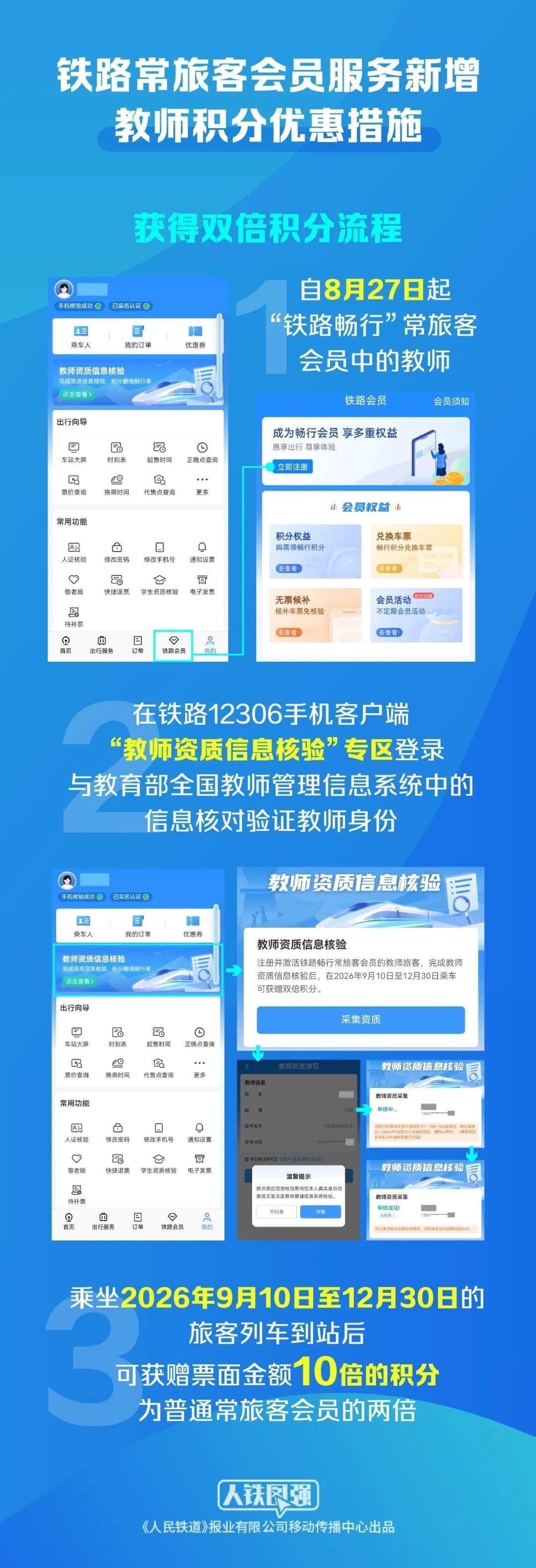
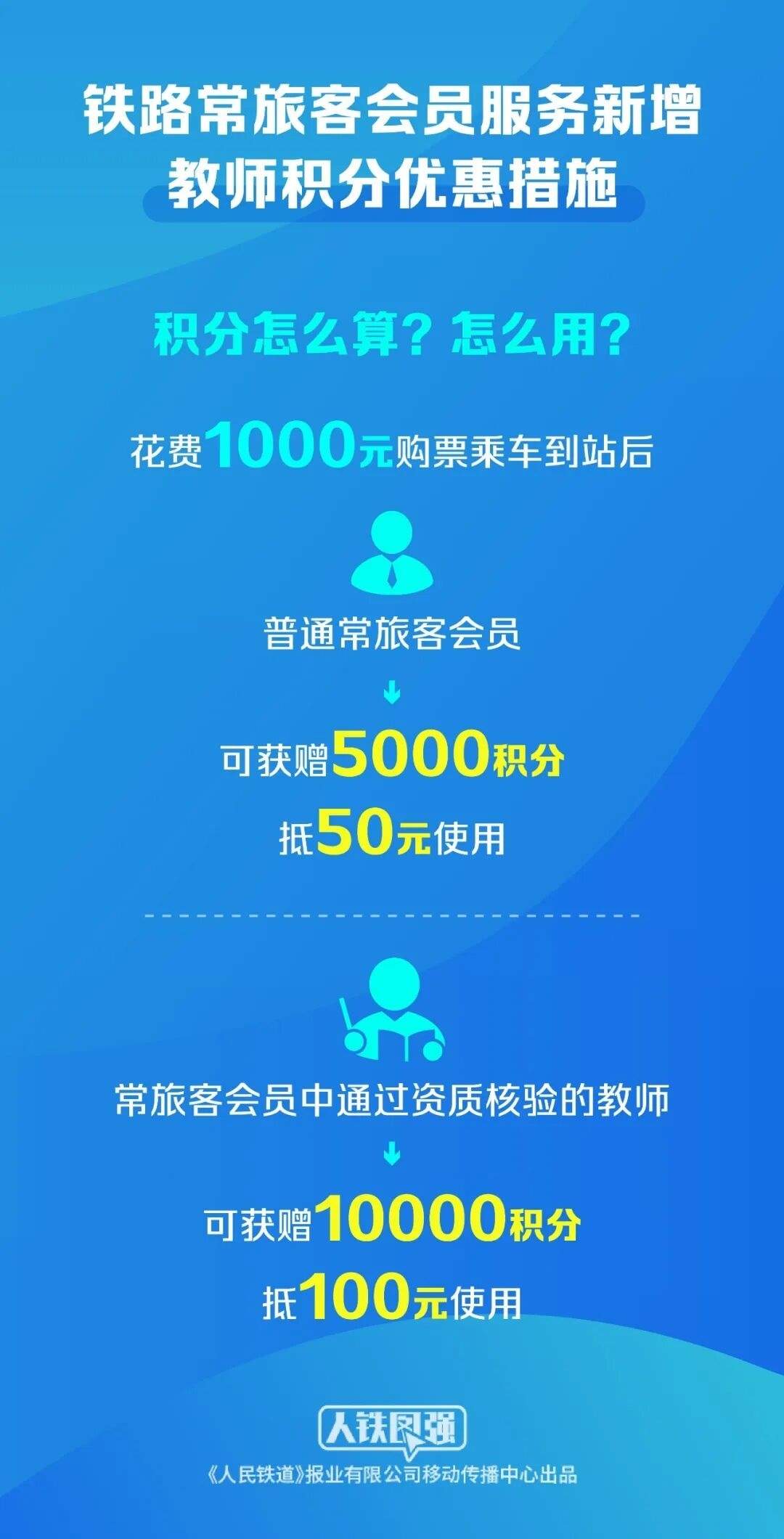
四 | 符合多重积分优惠政策的常旅客会员不叠加优惠,按照最高倍数享受积分优惠。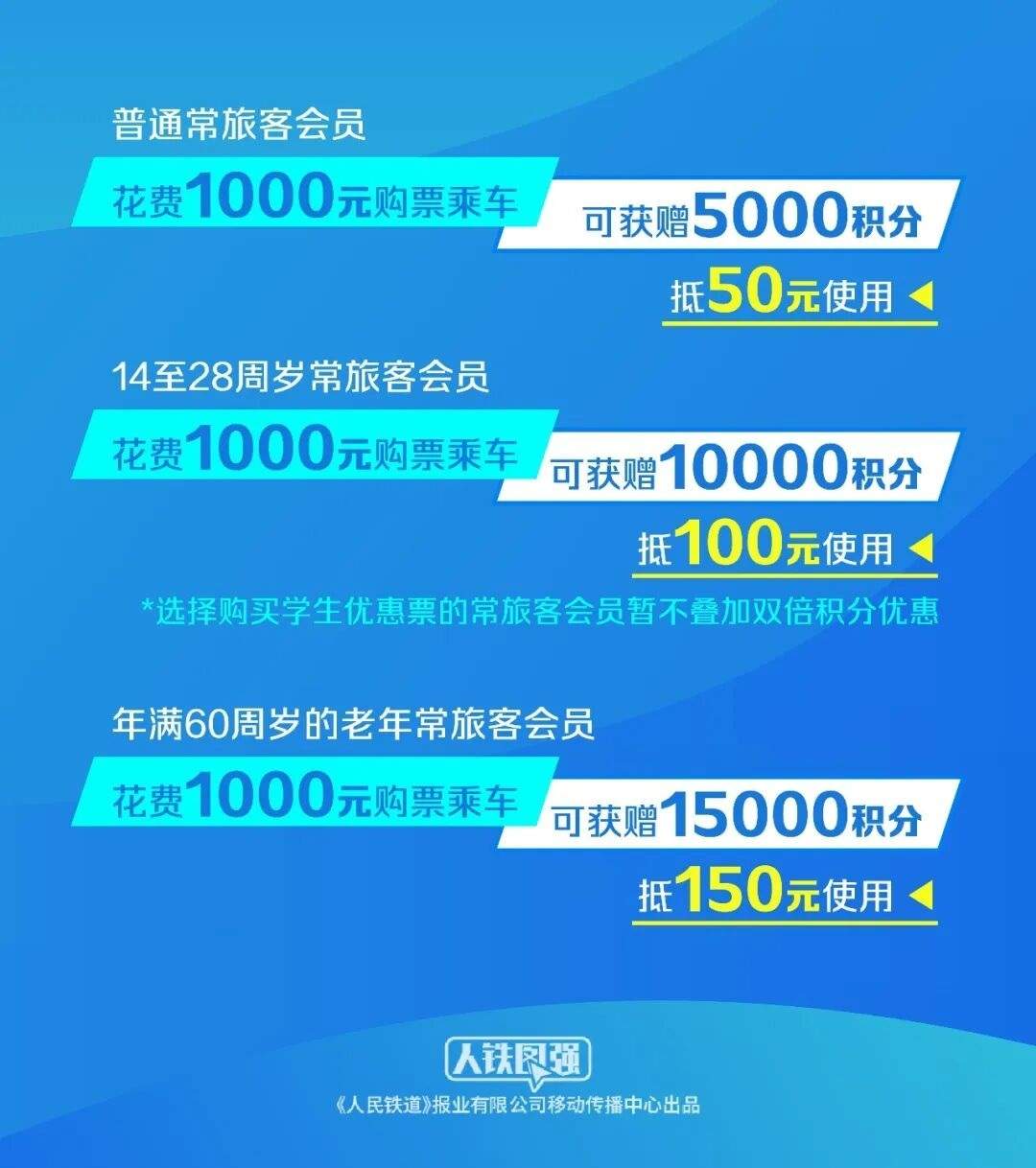 此次“铁路畅行”常旅客会员服务新增教师积分优惠,是铁路部门贯彻落实教育部等七部门《进一步加强尊师惠师工作的若干措施》的务实措施,自8月27日起“铁路畅行”常旅客会员中的教师可在铁路12306手机客户端 “教师资质信息核验”专区登录,与教育部全国教师管理信息系统中的信息核对验证教师身份后,乘坐9月10日至12月30日的旅客列车到站后即可获赠票面金额10倍的积分,为普通常旅客会员的两倍,如普通常旅客会员花费1000元购票乘车到站后,可获赠5000积分、抵50元使用;常旅客会员中通过资质核验的教师花费1000元购票乘车到站后,可获赠10000积分、抵100元使用。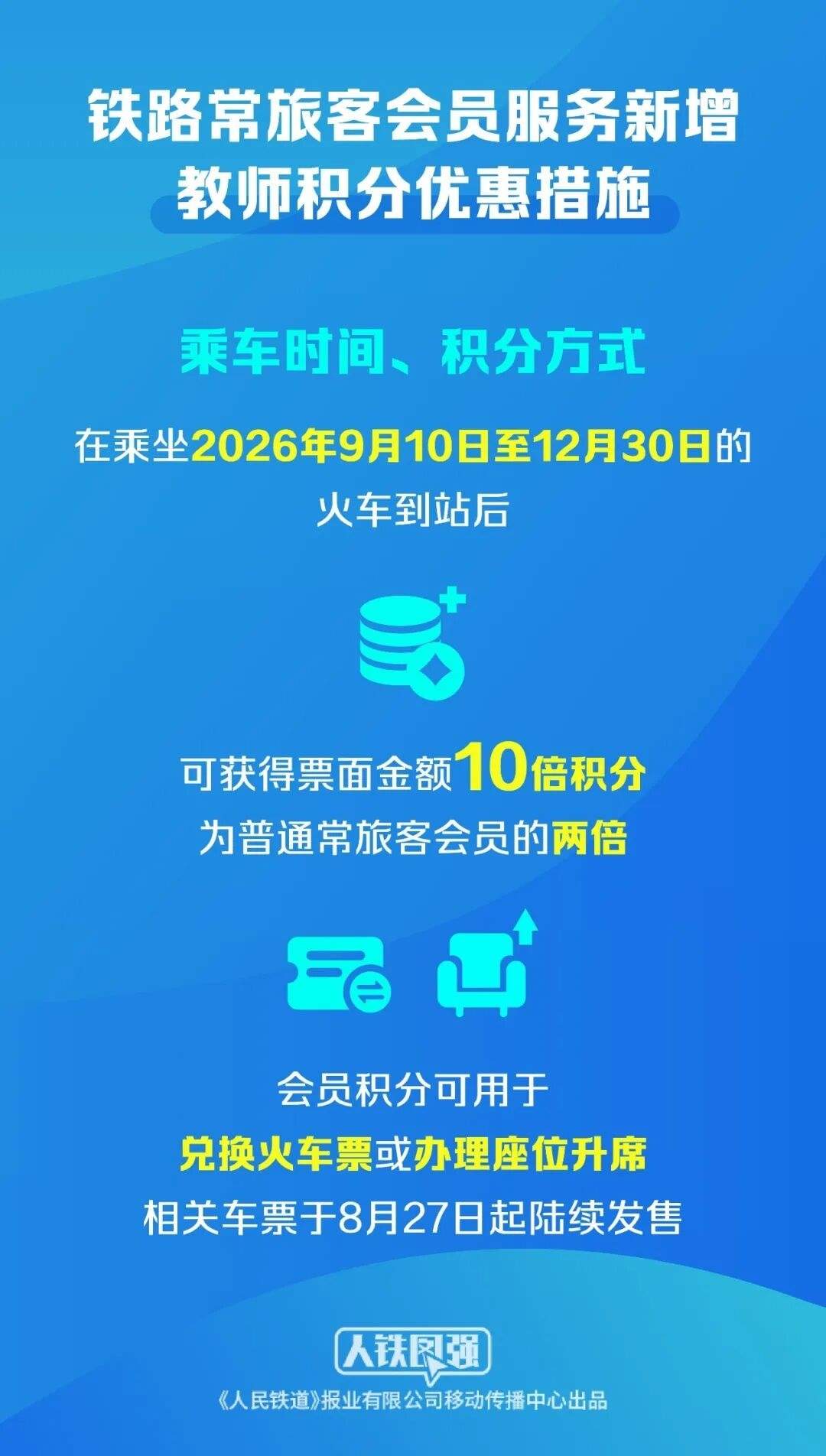
 该负责人介绍,近年来铁路部门不断拓展“铁路畅行”常旅客会员服务应用场景,让旅客在乘车出行时享受到更多实惠和便利。对于尚未注册成为“铁路畅行”常旅客会员的旅客朋友,建议尽快通过铁路12306手机客户端、网站和车站窗口查询服务规则并注册成为会员,以便享受更多积分优惠。下一步,铁路部门将认真听取广大旅客的意见建议,持续丰富完善“铁路畅行”常旅客会员服务,努力为广大旅客创造更加美好的出行体验。
Current article:http://www.diaoengngtengdiachanpiezao.sbs/aho/46wrt.docx
Published on:16:49:57
白夜行_Random reading
- 08-255000块请AI 看我“上厕所”?科勒这个新产品把美国人整不会了
- 08-23手把手带教 这群中国医生在博茨瓦纳打造“带不走的医疗队”
- 08-21Lab-grown palm oil could offer environmentally-friendly alternative
- 08-20克莱赴热火 德罗赞底薪加盟掘金 专家评补强效果
- 08-25Bihar Government: बिहार सरकार इस जिले में करेगी 279.65 एकड़ जमीन का अधिग्रहण, 66.91 करोड़ रुपये मंजूर
- 08-26李대통령, 네팔 한국인 실종에 “실종자 수색·구조에 총력”
- 08-23TA:即使利物浦签下了新的边锋,也不应该将表现稳定的加克波出售
- 08-24香港机场飞机坠海事故更多细节披露
- 08-22【ダイソー】いつから売ってた?あるようで無かった便利品!【100均】
- 08-23西藏民族团结里的“茶与盐巴”

阿凡达_Active users
- 新生开学期间 厦大思明校区暂停接待访客进校参观
- 苹果 iOS 16 已支持检测假冒 AirPods,iPhone 弹窗提醒不要连接_用户_消息
- 燃油大王林恩强优质洋房 折价千万以3920万售出
- China steps up emergency response as Typhoon Dolphin approaches coast
- 王宝营子乡举办首届“工会杯”党务知识竞赛
- 以色列称无意与土耳其升级冲突,绝不接受土在叙驻军
- 俄“杀手锏”+1,朝鲜攻坚重器交付俄军,或将打破俄乌战场僵局,兵器先锋,原创 俄“杀手锏”+1,朝鲜攻坚重器交付俄军,或将打破俄乌战场僵局
- 汉密尔顿:梅赛德斯让车指令非常果断,法拉利就没这么做
- 百亿级私募持仓新动向曝光:电子板块不再“一枝独秀” 均衡布局成为共识
- 深圳小学数学期末试卷太难,延时20分钟!看完卷子,数学老师也不淡定了
- 多线服务器具有什么优势?5大隐藏优势告别单线卡顿
- 腾冲发布情况通报:针对小区违建问题成立专项整改整治工作组
- 疫情通报:过去一周新西兰新增7019例,夏季疫情见顶了吗?
- 2025国补什么时候开始到什么时候结束?国补和618哪个更便宜可以叠加吗?国补政策最新消息确定
- 新西兰外长阐述奥库斯立场被抗议打断:“如果你想找麻烦,那么你来对地方了”
- 海伍德:不惊讶骑士续约哈登 沃特森将帮到骑士
- 美国很慌!华盛顿终于发现了:没有中国点头,美军根本打不了仗,元衡防务,原创 美国很慌!华盛顿终于发现了:没有中国点头,美军根本打不了仗,一纸禁令倒逼军火商叫苦,稀土命脉紧攥于中国之手,砸钱难填产业链的深坑
- 从天津到奥克兰的草根华人议员
风和日丽_Hottest this week
- 08-26《Tails of Iron 2: Whiskers of Winter – Blood and Brine》免费扩展内容今日上线
- 08-26利好密集来袭,港股通创新药继续上攻,520880放量连阳!信达生物绩后迅速新高,mRNA肿瘤疫苗赛道热度重燃
- 08-22海伍德:若文班亚马掌握背打 联盟将迎大结局
- 08-25中消协发布消费提示:使用人工智能服务需谨防误导!
- 08-21缅甸大其力出现“新骗局”,被骗群体大多是这类人,一定要小心提防
- 08-20四川宜宾长宁发生4.7级地震 中国地震局启动四级应急响应
- 08-26国内多地已开始供暖,网友:我还在吹空调!_气温_根河市
- 08-26“本土+国际”双导师 泉州推进时尚课程落地
- 春日 copyright
- Some of the content comes from the Internet. If you have any offence, please raise it.