
难兄难弟
EU can't reach decision on prolonging the use of chemical herbicide glyphosate_我的网站

一 | BRUSSELS -- A European Union decision on whether to authorize the use of the controversial chemical herbicide glyphosate in the 27-nation bloc for at least 10 more years was delayed for a month after member countries failed to agree on Friday.The chemical, which is widely used in the 27-nation bloc, is approved on the EU market until mid-December. Representatives of the EU’s executive arm and member countries voted Friday in favor of renewing its authorization until 2033, despite protests from environmental groups. But to be adopted, the 10-year extension proposed by the European Commission required a “qualified majority,” defined as 55% of the 27 members representing at least 65% of the total EU population of some 450 million people. Several member states abstained, and that was not achieved. The European Commission is now expected to amend its proposal before another vote takes place next month. Ultimately, if no consensus is found, the Commission will have the final say.Green members of the European Parliament welcomed the delay and urged member states to vote for a complete ban of glyphosate.“It is irresponsible to again renew the authorization of the use of glyphosate,” said Bas Eickhout, the vice-chair of the Parliament's environment committee. "This would give the big agri a blank check to earn billions by selling a pesticide for which there are still big gaps in knowledge about the effects on our health, and at the same time poses large risks for European biodiversity.”Over the past decade, glyphosate, used in products like the weedkiller Roundup, has been at the heart of heated scientific debate about whether it causes cancer and its possible disruptive effect on the environment. The chemical was introduced by Monsanto in 1974 as an effective way of killing weeds while leaving crops and plants intact.The France-based International Agency for Research on Cancer, which is part of the World Health Organization, classified it as a “probable human carcinogen” in 2015. The EU’s food safety agency had paved the way for the 10-year extension when it said in July it “did not identify critical areas of concern” in the use of glyphosate. The U.S. Environmental Protection Agency found in 2020 that the herbicide did not pose a health risk to people, but a federal appeals court in California ordered the agency last year to reexamine that ruling, saying it wasn’t supported by enough evidence.EU member states are responsible for authorizing the use of products including the chemical on their national markets, following a safety evaluation.In France, President Emmanuel Macron had committed to ban glyphosate before 2021 but has since backpedaled. Germany, the EU's biggest economy, plans to stop using it from next year, but the decision could be challenged. Luxembourg’s national ban, for instance, was overturned in court earlier this year.Greenpeace had called on the EU to reject the market reapproval, citing studies indicating that glyphosate may cause cancer and other health problems and could also be toxic to bees. The agroindustry sector, however, claims there are no viable alternatives.“Whatever the final decision that emerges from this re-authorization process, there is one reality that member states will have to face up to,” said Copa-Cogeca, a group representing farmers and agricultural cooperatives. “There is as of yet no equivalent alternative to this herbicide, and without it, many agricultural practices, notably soil conservation, would be rendered complex, leaving farmers with no solutions.”。
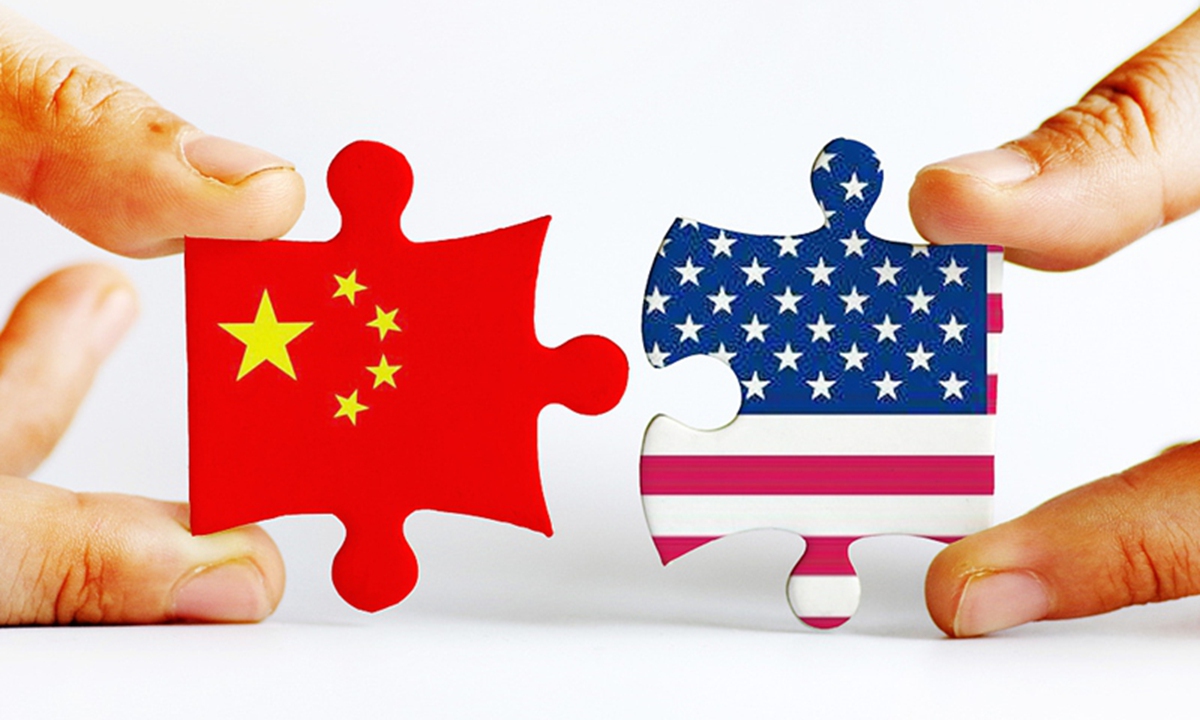
The proposed Office of Management and Budget (OMB) rule, set to take effect in December, would mark one of the biggest overhauls of US science funding in decades, giving political appointees greater authority over grant awards previously guided by scientific peer review and requiring that they "advance the President's policy priorities," according to the Washington Post.
It would also effectively expand the 2011 Wolf Amendment, which bars scientists from using NASA funding for bilateral collaborations with China, to all federal agencies and scientists receiving federal funds, marking the largest break in US-China scientific engagement in decades, the US media outlet reported.
So far, the proposed rule has garnered nearly half a million public comments, many from scientists and leading US science bodies. A Washington Post analysis of 50,000 of those comments found that around 88 percent were negative.
The rule, initially set to take effect in October, was pushed back to December after a bipartisan stopgap funding bill temporarily halted its adoption. Unlike the Wolf Amendment, the rule does not require congressional approval to take effect.
"I do think there are still members of Congress who think we have a monopoly on knowledge. They think we're still in the Cold War Soviet era ... where we were ahead in most areas of science and technology. That is not the case with China. We are no longer the leader in many areas of science," said Tobin Smith, senior vice president for government relations and public policy at the Association for American Universities, which advocates on behalf of leading US research universities, per the Washington Post.
Scientists warn that the rule risks subjecting long-term scientific research to four-year political cycles. "We will not succeed if with every new administration we are ping-ponging back and forth about priorities," the American Association for the Advancement of Science said in a blistering comment, urging the administration to withdraw the rule. "Fast-tracking such profound changes ... hands an easy victory to nations like China," it said, the Washington Post reported.
This reflects a fundamental divide between the US government and the scientific community over how science should develop, Wang Yiwei, a professor at Renmin University of China's School of International Studies, told the Global Times. He noted that politicians tend to believe that suppressing China as a competitor would allow the US to preserve its market dominance and technological edge.
Scientists, however, tend to follow a different logic, as scientific progress depends on openness, exchanges and collaboration. If science and technology are driven solely by competition and private capital, with the ultimate goal of maintaining technological monopolies, this could create greater risks and ultimately undermine US interests as well, Wang said.
The proposed rule change is the latest salvo in a broader battle in Washington over how to respond to China's rise as a scientific superpower. In July, the US National Science Foundation (NSF) also moved to ban collaborations between scientist it funds and many Chinese research institutions and their employees, according to Science magazine.
Liu Shaoshan, director of the Center for Embodied AI at the Shenzhen Institute of Artificial Intelligence and Robotics for Society and a former US-based researcher, told the Global Times in a previous interview that the NSF's new proposed rules created a "talent wall," arguing that restrictions based on nationality, institutional affiliation, and research partnerships could reduce the global talent pool available to the US, weaken its ability to attract leading scientists, and slow scientific innovation.
Liu also said scientific advancement relies not only on discovery but also on the exchange, validation, and dissemination of knowledge.
Wang also said China has built significant strengths through its vast pool of scientists and engineers, complete industrial chains and massive application scenarios, while increasingly moving from application-oriented innovation toward original research. Against this backdrop, US technological blockades and restrictions on cooperation are unlikely to halt China's progress, but could instead isolate American scientists from China's latest research and collaboration opportunities. Such an approach could also prevent the two countries from leveraging their respective strengths and ultimately undermine US competitiveness, Wang said.
。
Current article:http://www.diaoengngtengdiachanpiezao.sbs/news/20260826_12670.doc
Published on:17:25:32