杀人回忆
More global travelers are going beyond China’s megacities to experience farming, village life and local traditions firsthand_我的网站

一 | ミラノ・コルティナ五輪は現地時間2月22日、閉会式が行われ、約2週間の熱戦に幕を閉じた。日本勢は過去最多となる24個のメダルを獲得。
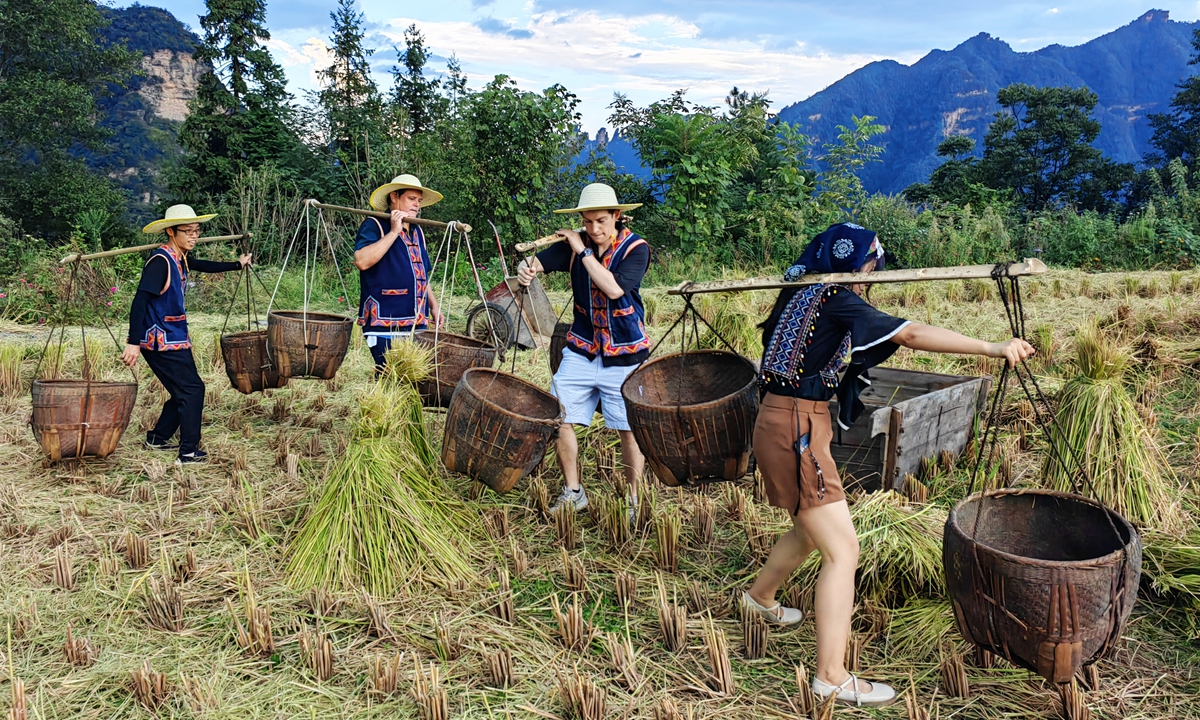
US tourists experience the farming culture of harvesting crops at an agritourism farm in Zhangjiajie, Central China's Hunan Province. Photo: VCG
Editor's Note:In early 2026, the phrase "Very Chinese Time" went viral on global social media platforms. Content centered around China's everyday life has been widely viewed and discussed, bringing the Chinese experience into the international public sphere in an extremely down-to-earth way. However, this phenomenon goes beyond mere online popularity - it is unfolding amid the ongoing reshaping of the global order and the accumulation of anxiety in Western societies. A deeper transformation is emerging, as China's lifestyle, pop culture and technological practices are increasingly recognized, discussed and used as references around the world.
This series uses "Very Chinese Time" as an observation lens to go beyond a single internet trend and systematically showcase how the Chinese experience is entering global everyday life. This is the sixth installment of the series."This is way harder than any weights I lifted in the gym. I never felt so much pain and struggle as when I was carrying those watermelons," Kevin Loi-Heng could not help thinking as he learned to carry two baskets of watermelons on a shoulder pole, just as local farmers do.
The 29-year-old traveler from London had seen China's modern megacities on previous business trips. But two weeks spent working on farms in the countryside of Fenghua, Ningbo, East China's Zhejiang Province, gave him a chance to see a very different side of the country.
China's inbound tourism boom has continued into 2026. Inbound tourism maintained strong growth, while data from the National Immigration Administration showed that 22.91 million foreigners entered China in the first half of the year, up 20.4 percent year-on-year, according to a report about 2026 tourism market insights for the first half of the year released by the China Tourism Association.
As "China Travel" continues to trend across social media, a trip to Beijing, Shanghai, Guangzhou or Shenzhen is no longer the only way foreign visitors explore the country. Increasingly, they are heading into villages, farms and fields.
Videos posted by foreign travelers show visitors picking fruit, harvesting rice, feeding livestock, learning traditional farming techniques and simply spending time with local villagers.
Through these immersive rural experiences, they are discovering a different China, one that is earthy, vibrant and deeply human, a tourism expert told the Global Times.
See a different sideKevin's own company focuses on research into sustainable agriculture and soil health, so working with the land was not entirely unfamiliar territory. Yet he found that China's countryside taught him a great deal.
"One question I had before coming to China to do farm work was: With 1.4 billion people, how does China feed all of its people?" Kevin told the Global Times. "I had this picture in my head that China was very large, and that remote rural communities would have different ways of living and different land practices. I wasn't sure if they would accept a foreigner like me."
The fact is, this land welcomed everything.
To get to the mountain fields and start working, Kevin and his fellow participants would get up as early as 4 am and begin working by 6 am. They picked local white peaches, harvested watermelons and dug up peanuts.
Beyond picking crops, Kevin helped prepare the land and soil, plant seasonal crops such as chilies, prune overgrown trees and clean up farmland. He also fed pigs, chickens, ducks and geese, checked agricultural equipment at the local rural market and spoke with farmers and agricultural workers about the challenges they face in their daily lives.
"One of the first tools I used was a backpack sprayer. It was actually very practical," he recalled.
Kevin said the experience broadened his understanding of China. "I saw that the working people are very humble, but also very hardworking."
Over the past year, China's countryside has emerged as a new growth area for inbound tourism.
According to data released by Trip.com, a large online travel agency, on February 11, its affiliated rural resort farms saw inbound tourism bookings increase by more than 50 percent year-on-year in 2025, while the number of room nights booked by international visitors rose by more than 75 percent. "Visiting the Chinese countryside" is becoming a new option for international travelers who once focused overwhelmingly on major cities. Singapore, the US, Australia, Germany and Malaysia were among the major source markets.
Many overseas vloggers are turning their lenses toward China's countryside, hoping to find a different perspective from which to observe the country.
In March, US content creators Ludwig and Michael were cycling through a village in Central China's Hunan Province, when they encountered villagers preparing for a traditional funeral. Mistaking the gathering for a busy restaurant and the people dressed in white mourning clothes for cooks, they initially misunderstood what was happening. But rather than being offended, a local villager surnamed Li invited the two travelers into his home for a meal. The three chatted about their cycling adventures along the way and eventually sang a song together before parting ways.
After Ludwig uploaded the footage to YouTube, the video received more than 2 million views, offering overseas audiences an unexpected glimpse into culture in a Chinese village.
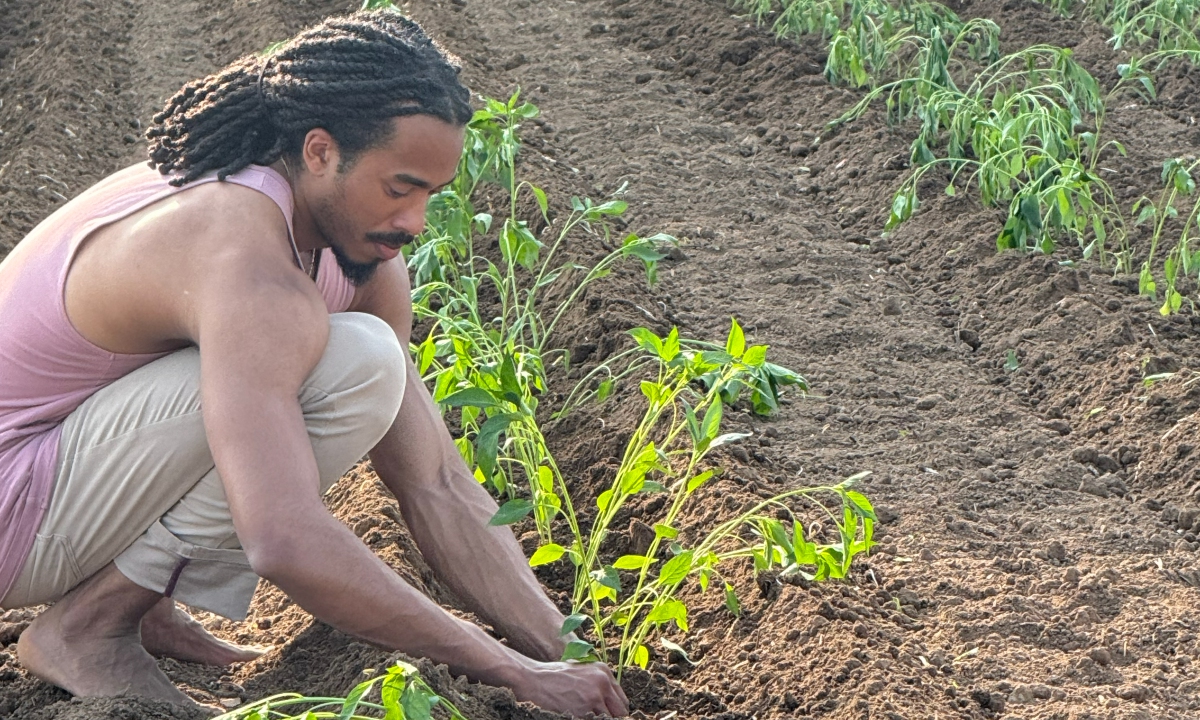
Kevin Loi-Heng, a 29-year-old traveler from London, works on a farm in Qufu, East China's Shandong Province, on April 18, 2026. Photo: Courtesy of Kevin Loi-Heng
The appeal of countrysideAs overseas audiences increasingly encounter images of China's highly modernized cities across various online platforms, some travelers are showing greater interest in experiences that offer a sense of authenticity, simplicity and contrast, Zhang Lingyun, a professor and the executive editor-in-chief of Tourism Tribune journal, told the Global Times.
After Kevin showed the video on social media, a lot of his friends found it quite unexpected. "They found it interesting and funny. One of my friends remarked, 'You're always doing side quests,' and said he wished he could live an adventurous life like me," Kevin recalled.
The criteria by which travelers evaluate an experience have changed, Zhang emphasized.
Zhao Mai, an English-speaking tour guide who works extensively with international visitors, has observed this shift firsthand.
Zhao told the Global Times that many young foreign travelers are increasingly interested in participating in everyday activities and interacting directly with local people rather than moving from one landmark to another.
There is another attraction: value for money. China's rural tourism destinations can offer international visitors a combination of affordability, quality and variety that is difficult to match, Zhao said. The diversity of China's countryside is also a major advantage.
In 2025, among the hundreds of "best tourism villages" selected by UN Tourism, China alone accounted for 19, spanning a vast geographical range from the eastern coastal regions to the western plateaus, and from the water towns of Jiangnan to the mountain villages of the southwest, according to the CCTV News.
But Zhao believed the most important factor is still the rise of experiential tourism itself.
"Experiential tourism has become one of the key forces driving the global tourism industry," he said. "And that is where China's countryside has a natural advantage. Rural areas in China offer natural scenery, local traditions, community life and opportunities for deeper participation."
Kevin said working in the village in Zhejiang gave him a new perspective on self-sufficiency and sustainable living.
The experience was so meaningful that he returned to China for a second trip, this time spending another two weeks doing agricultural work in Qufu, East China's Shandong Province.
A teacher living in the local Confucius Institute community spoke to him about the "qi" of the soil, an idea that, Kevin noted, is largely unfamiliar in the Western context.
"In the West, I was accustomed to explanations and theories in which soil is seen simply as a resource with physical and chemical properties that can be exploited," he said.
The trip helped him understand soil in a broader way, not merely as an agricultural resource, but as something essential to community life and health and as a connector between humans and the environment, or biosphere.
"I wish I could speak Chinese and understand local people's thoughts better, so I could learn more about Chinese rural agricultural life and local history," he said.
In May 2026, a village in Guilin, South China's Guangxi Zhuang Autonomous Region, held its annual Terraced Fields Plowing Festival. Across the layers of terraced fields, local residents demonstrated traditional farming practices, attracting visitors from both China and abroad, the news outlet chinanews.com reported.
He Chengxi, a deputy manager of the media department of Guilin Longji Tourism Co., Ltd., told the Global Times that foreign visitors are particularly drawn to this immersive experience as they are intrigued by this traditional method of farming, and found Chinese farming culture novel and meaningful.
And social media shows that the phenomenon goes beyond short-term tourism. For example, some foreigners who have married Chinese partners have shared their enjoyment of rural life online.
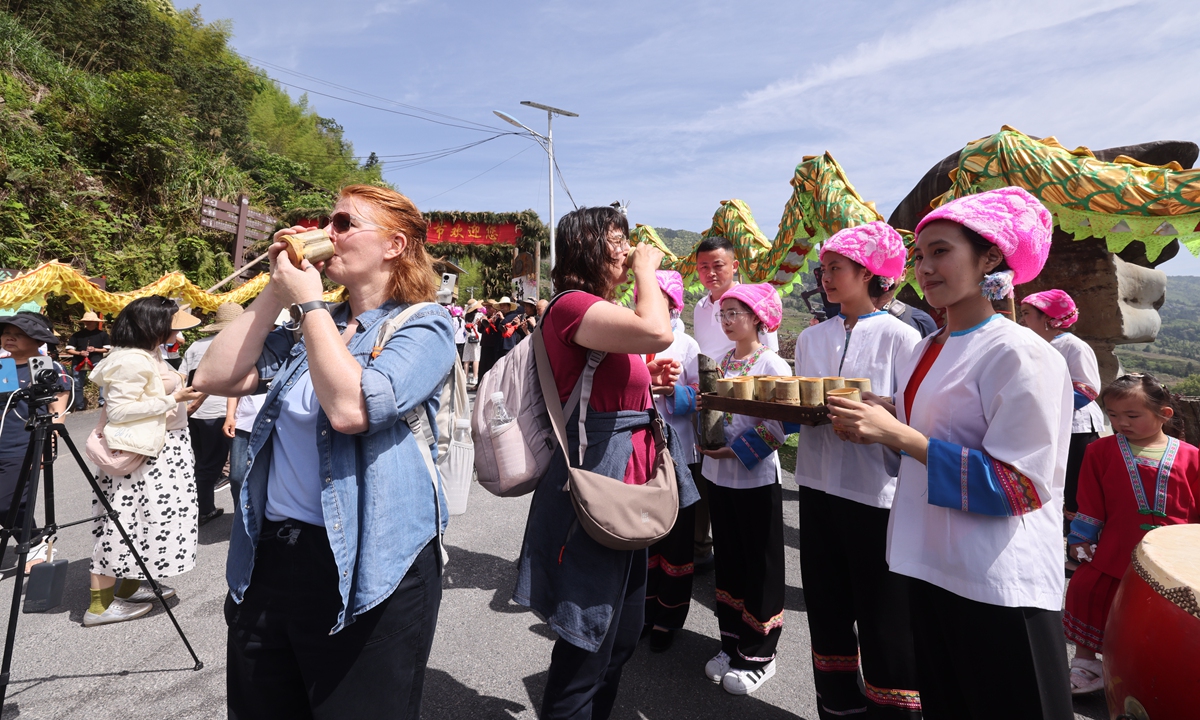
Foreign visitors taste local drinks during the Terraced Fields Plowing Festival held in Guilin, South China's Guangxi Zhuang Autonomous Region. Photo: Courtesy of He Chengxi
From tourism traffic to lasting connectionsZhao believes the growing interest in rural tourism should be viewed against the broader backdrop of China's efforts to revitalize the countryside and integrate agriculture, culture and tourism.
China unveiled its "No. 1 central document" for 2026 on February 3, outlining plans to advance agricultural and rural modernization and to promote all-around rural revitalization, according to the Xinhua News Agency.
According to estimates from the data center of the Ministry of Culture and Tourism, China received 793 million rural tourism visits in the first quarter of 2026, up 12.2 percent year-on-year. Rural tourism revenue reached 457 billion yuan ($63.5 billion), up 10.9 percent, Xinhua reported.
The direct economic impact of foreign visitors to rural areas, however, is harder to measure. Zhang said it seems that that rural inbound tourism remains a relatively small trend amplified by social media rather than an established industry at scale.
Zhao believes their most important contribution may therefore be something less immediately measurable: international visibility.
There is also a less visible effect. The arrival of foreign tourists can prompt local residents to reconsider the value of their own everyday lives, Zhao noted.
"Farmers who are accustomed to regarding planting, harvesting and tending livestock as routine work may suddenly find outsiders treating those same activities as something worth traveling thousands of kilometers to experience," he said.
That outside perspective can give ordinary agricultural work, local food and traditional customs a new sense of value, not only as tourism products, but as elements of local identity, Zhang said.
How can this social media traffic be turned into lasting tourism demand? Zhang believed that the key might not be intervening too heavily in the specific products that villages offer, but improving the basic conditions that allow international visitors to access them.
The government's role, the expert suggested, is to help bridge the "last mile," making rural destinations easier and safer to reach and navigate, while leaving room for villages and travelers themselves to determine what kind of experiences are meaningful.
And beyond economics, Zhang said, these encounters carry cultural exchange value.
"People-to-people exchanges can help dispel misunderstandings and allow the world to see another side of China: ordinary Chinese people, like people everywhere, value peace, stability and a prosperous life. That deeper cultural encounter may ultimately be one of the most valuable things international tourism can offer," he explained.
Kevin has not stopped thinking about the people and places he encountered in China's countryside. The experience changed his impression of rural China and made him want to return and stay longer.
"I would like to know more about what other people who have experienced these agricultural activities think," he said. "Is now the time to reconnect with this ancient practice?"
。その中でも、フィギュアスケートがこちらも過去最多となる6個のメダルを手にする盛り上がりを見せた。【写真】「もっと食べた方が…」心配の声が集まるザギトワの近影をチェック 一方で、対照的な国もある。女子フィギュア界を長年、席巻してきたロシアだ。今大会のロシアは国としての出場が認められず、アデリア・ペトロシャンが個人の中立選手として出場。しかし、演技に細かなミスも出て、6位に終わった。2014年のソチ五輪以降、エテリ・トゥトベリーゼ氏の門下生が五輪の頂点を争ってきた流れを踏まえれば、この結果は象徴的と言える。 ロシアメディア『スポーツ24』は大会を振り返り、「ソチ五輪以来初めて、女子シングルでロシア代表が金メダルを獲得できなかった」と指摘。さらに「エテリ・トゥトベリーゼの教え子が表彰台のトップに上がらなかったのは2014年以来初めてだ」とも伝え、「長年にわたりチャンピオンを輩出してきた“伝説のベルトコンベヤー”は、もはや機能不全に陥ってしまったのだろうか」と論じた。

二 | 同メディアは要因の一つとして年齢制限の変更を挙げる。「年齢制限が17歳に引き上げられたことは大きな打撃だった」とした上で、「これまでのシステムでは、女子選手は15歳前後でピークの状態に達するようにトレーニングプロセスが構築されていた。リプニツカヤ、ザギトワ、ワリエワはその典型例である」と指摘した。
![]()
三 | 国際スケート連盟(ISU)は北京五輪後、シニアの最低年齢を段階的に17歳へ引き上げた。ロシア側の論調は、この制度変更が従来の育成サイクルに影響を与えているという見方だ。記事では、ペトロシャンが18歳8か月で五輪に出場し、トゥトベリーゼ門下としては最年長だった点にも触れている。 さらに同メディアは、「17歳のアスリートから超人的なパフォーマンスを引き出すのは、15歳の場合よりも難しい」と主張。
![]()
四 | その背景として「思春期による身体的変化」を挙げた。

五 | また、現在の国際大会出場停止の状況についても言及し、「いつ世界舞台に戻れるか分からない中で、モチベーションを維持するのは容易ではない」との見解を示している。 こうした分析から、ロシア国内ではエテリ流メソッドの転換期を指摘する声が出ている。

六 | ただし、今回の結果が一つの時代の終焉を意味するのか、それとも過渡期にすぎないのかはなお見極めが必要だ。年齢規定の変更と国際情勢という複合要因の中で、ロシア女子がどのような再構築を図るのか。新たなサイクルに向けた動向が注目される。[文/構成:ココカラネクスト編集部]。
Current article:http://www.diaoengngtengdiachanpiezao.sbs/news/20260826_55891.htm
Published on:00:11:29

 四川南充:“十五五”规上工业总产值锚定翻番 加快建成省域经济副中心,四川南充:“十五五”规上工业总产值锚定翻番 加快建成省域经济副中心
 体彩助力添活力 济源全民健身掀热潮
 60亿签约!长江存储“朋友圈”扩容
 中俄联合声明:遵循睦邻友好、尊重国家主权的原则共同开发黑瞎子岛
 机器人400米预赛状况百出:有的摔出火星子、有的赛后四分五裂
 中报关注度持续升温,机构建议配置三条业绩主线
查看所有0条评论>>